Cover Crops in Arable Farming: What They Actually Deliver on Farm
Cover crops are widely discussed, but on the farm, the main concern is whether they deliver real benefits or simply add costs and complexity. To determine whether cover crops are worthwhile, carefully compare the additional seed and management costs with tangible returns such as enhanced soil structure, improved nutrient retention, and better weed control. In some cases, these advantages can quickly offset expenses, especially when cover crops address a specific issue.
On farms, cover crops work best when addressing specific problems—bare winter soil, compaction, or difficult spring fields. Without a problem to solve, they only add extra work
Start with the problem, not the system
The biggest mistake is to use cover crops without a defined problem. Benefits such as improved soil, reduced erosion, and weed suppression will only be apparent as part of a measured programme.
Rye and oats are excellent choices here, as their dense roots help hold soil in place and prevent runoff. If it’s compaction, you need something that will actually move through the profile to make selection easier. Here’s a quick summary matching common problems to recommended cover crop species:
- Soil erosion and runoff: Rye, oats, phacelia
- Compaction: Radish, tillage turnip, deep-rooting chicory
- Nutrient loss (especially nitrogen): Vetch, mustard, clover
- Weed pressure: Rye, buckwheat, oats
This lets you tailor cover crop choices to each field’s biggest challenge.
Useful tips:
- Decide the main goal before choosing a mix (structure, nutrients, weed control)
- Start with a few fields, not the whole farm.
- Avoid “one size fits all”—tailor it to field conditions.
The primary benefit of cover crops is better soil structure, which pays off over time.
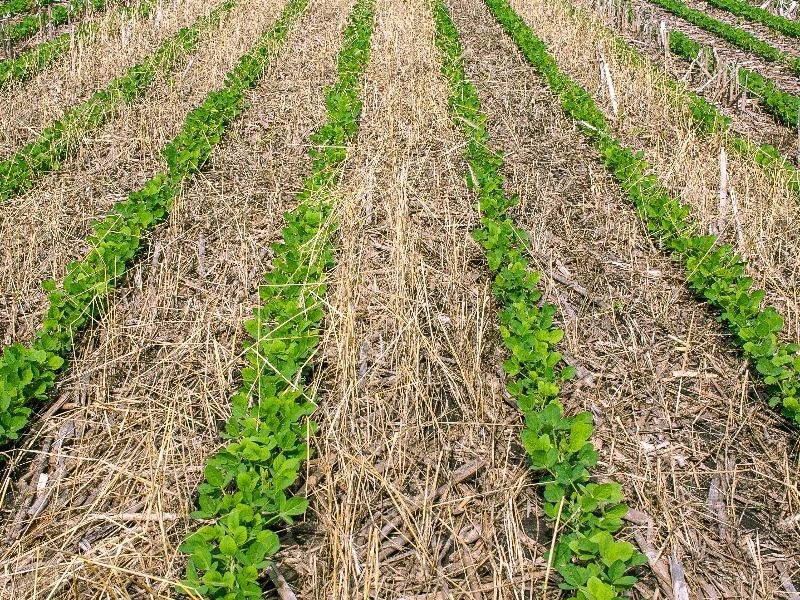
The biggest long-term gain from cover crops is improved soil structure. Root systems bind soil together, reducing erosion, while also creating channels that improve drainage, aeration, and root development for the following crop.
Over time, this builds organic matter and supports biological activity. Earthworms and microbes become more active, helping to stabilise the soil and improve resilience in both wet and dry conditions. Better structure also means improved water management—more infiltration when it’s wet, and better retention when it’s dry.
Good establishment of cover crops is key and depends on several important aspects: preparing a fine, firm seedbed helps ensure even germination; drilling at the right time, soon after harvest, allows enough growing days for the cover crop to get away strongly; and having enough moisture in the topsoil is important for rapid early growth. Missing any of these steps often leads to patchy, weak crops that cannot deliver the benefits. Paying close attention to these basics will help maximise the return from your cover crop investment.
Useful tips:
Nutrient management and cost control
Cover crops keep essential nutrients in the soil rather than losing them, directly benefiting soil fertility.
After harvest, soil nitrogen is vulnerable to leaching. Growing a cover crop captures that nitrogen and stores it in plant biomass. When it breaks down, those nutrients are released back into the soil for the next crop.
Good management can boost efficiency and cut fertiliser needs.
Useful tips:
- Establish cover crops quickly after harvest to capture nutrients.
- Avoid leaving bare soil where nutrients can leach
- Factor nutrient release timing into your fertiliser plan
Weed suppression and pest balance
A dense, well-established cover crop physically outcompetes weeds, providing its main benefit by reducing weed growth and the need for chemical control.
The success depends on the quality of the establishment. Common causes include late drilling, poor seedbed quality, pest damage (such as slugs or flea beetles), insufficient soil moisture at sowing, and uneven residue management. Identifying and addressing these issues up front will help ensure effective weed suppression.
Useful tips:
- Aim for rapid establishment to outcompete weeds early.
- Choose species with good ground cover if weed suppression is the goal.
- Gaps from poor establishment cut the potential benefit.