Chat on WhatsApp

Published by Jason White on 17th Nov 2026

Farm Diversification: Finding the Right Opportunity for Your Farm

The strongest opportunities usually sit at the intersection of an asset the farm already has, a genuine customer need, and the business's ability to deliver it profitably.

Blog Image

Farm Diversification: Finding the Right Opportunity for Your Farm

“Diversification” covers an extraordinary range of businesses.
For one farm it might mean converting an unused building into commercial units. For another, it might mean holiday accommodation, renewable energy, food processing, contracting, or selling produce directly to consumers.
The temptation is to look at somebody else's successful diversification and ask:
“Could we do that here?”
A better starting point might be:
“What assets and advantages do we already have that somebody would pay for?”

Diversification isn't automatically a solution.

This was an interesting part of our conversation with Nick Evans of Oxbury Bank.
Diversification can provide additional income and reduce reliance on agricultural commodity markets.
But a second business isn't automatically better.
If an enterprise requires significant capital, management time and specialist knowledge, adding it to an already stretched farming operation can create more problems than it solves.
The fundamentals still apply.
Is there a market?
What will it cost?
What return could it generate?
Who's going to run it?
And what advantage does the farm have over somebody already operating in that market?

Start with what the farm already has.

Many successful diversification projects make use of an underutilised asset.
That might be:
  • buildings;
  • land;
  • location;
  • access;
  • energy infrastructure;
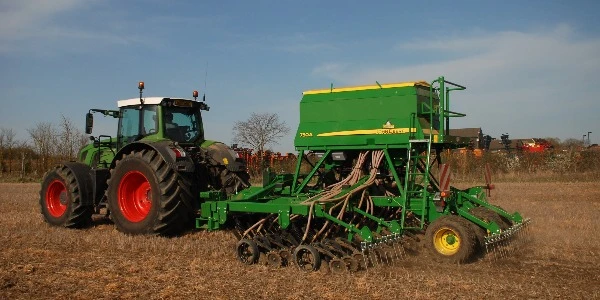
  • machinery;
  • labour;
  • produce;
  • knowledge or specialist skills.
A farm close to a major population centre has very different opportunities from one in a remote rural location.
A redundant traditional building might have considerable value in one setting and very little in another.
The opportunity has to fit the farm.

Diversifying outside agriculture

Some of the most obvious opportunities have relatively little to do with producing food.
Building lettings, workshops, storage, commercial property, tourism and energy projects can all generate income from the farm's existing asset base.
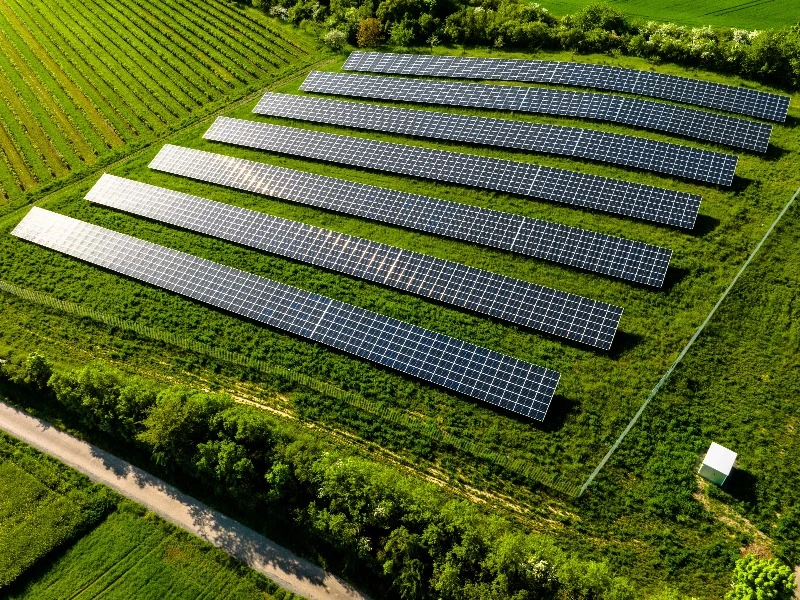
Battery storage and renewable energy have created another category of opportunity for suitable sites, although projects can involve substantial planning, grid and contractual considerations.
These businesses can help diversify income away from agricultural commodity cycles.
But it's important to recognise what has happened.
You haven't necessarily diversified the farming operation.
You've created another business alongside it.
There is nothing wrong with that – but it's a useful distinction.

Diversifying within agriculture

The other route is to generate more value from what the farm already produces.
Instead of simply asking how to produce more wheat, milk, meat or eggs, the question becomes:
Can we capture more of the value between the farm gate and the consumer?
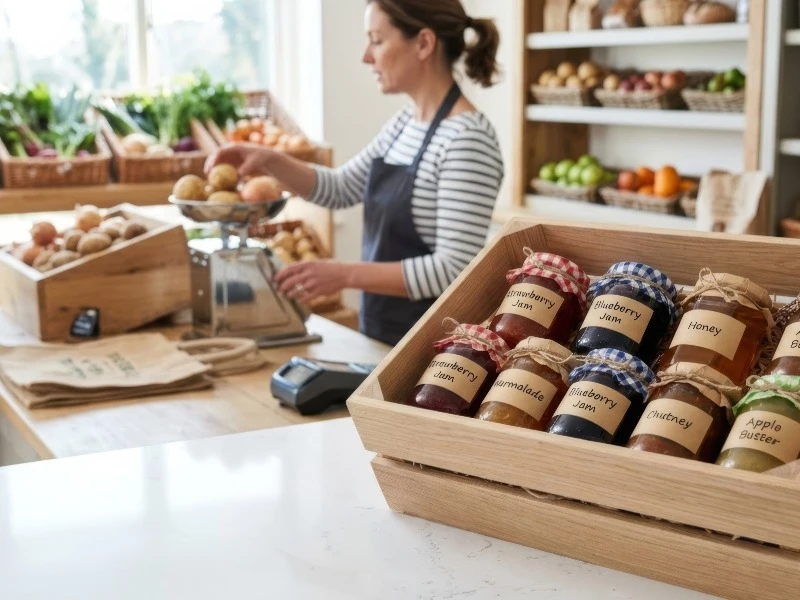
That could involve processing, packaging, direct sales, branding, specialist crops or supplying a managed supply chain.
During our podcast conversation, Nick used the example of relatively basic agricultural products becoming significantly more valuable once they're processed and presented in a convenient form for the consumer.
The opportunity isn't always producing more.
Sometimes it's adding more value to what is already being produced.

Don't follow the diversification fashion.

Agriculture has seen waves of fashionable diversification.
When one enterprise appears successful, others inevitably follow.
But ten farms opening similar attractions, storage businesses or direct-sales operations within the same catchment doesn't guarantee ten successful businesses.
Before committing capital, understand the customer.
Who are they?
Why will they buy from you?
How many are there?
What are they currently using instead?
And how difficult will they be to reach?
Those questions matter just as much to a farm diversification as they would to any other start-up business.

Don't ignore the opportunity cost.

Money isn't the only resource being invested.
Management time matters.
If a new enterprise consumes two days every week, those two days have to come from somewhere.
A diversification generating £50,000 of additional turnover may look attractive until you properly account for the additional labour, finance, management, and overhead.
Likewise, a relatively simple property letting requiring little day-to-day management may provide a very different return on the farmer's time.
Look at the whole return, not simply the revenue.

The best diversification is different for every farm.

No definitive list of the “best farm diversifications” exists.
And that's probably a good thing.
The strongest opportunities usually sit at the intersection of an asset the farm already has, a genuine customer need, and the business's ability to deliver it profitably.
For one farm, that might be storage.
For another, it could be energy.
For another, it might be taking a product they've produced for generations and finding a way to sell it for considerably more.
Diversification can make a farming business more resilient.
But like farming itself, it works best when the numbers – rather than the fashion – drive the decision.
Contact us