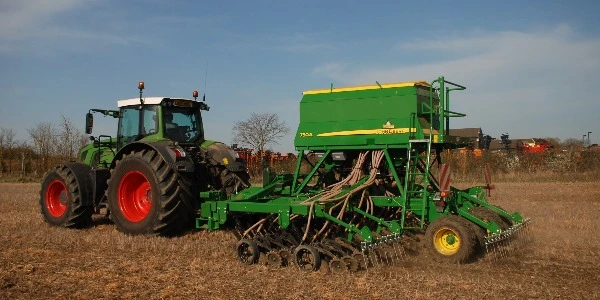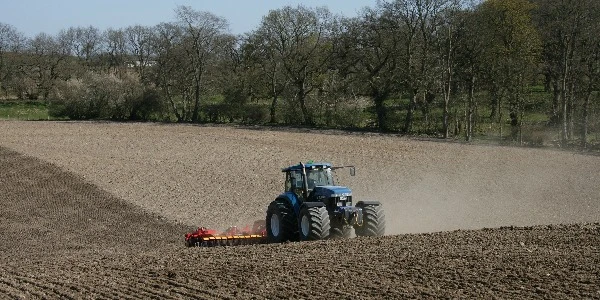

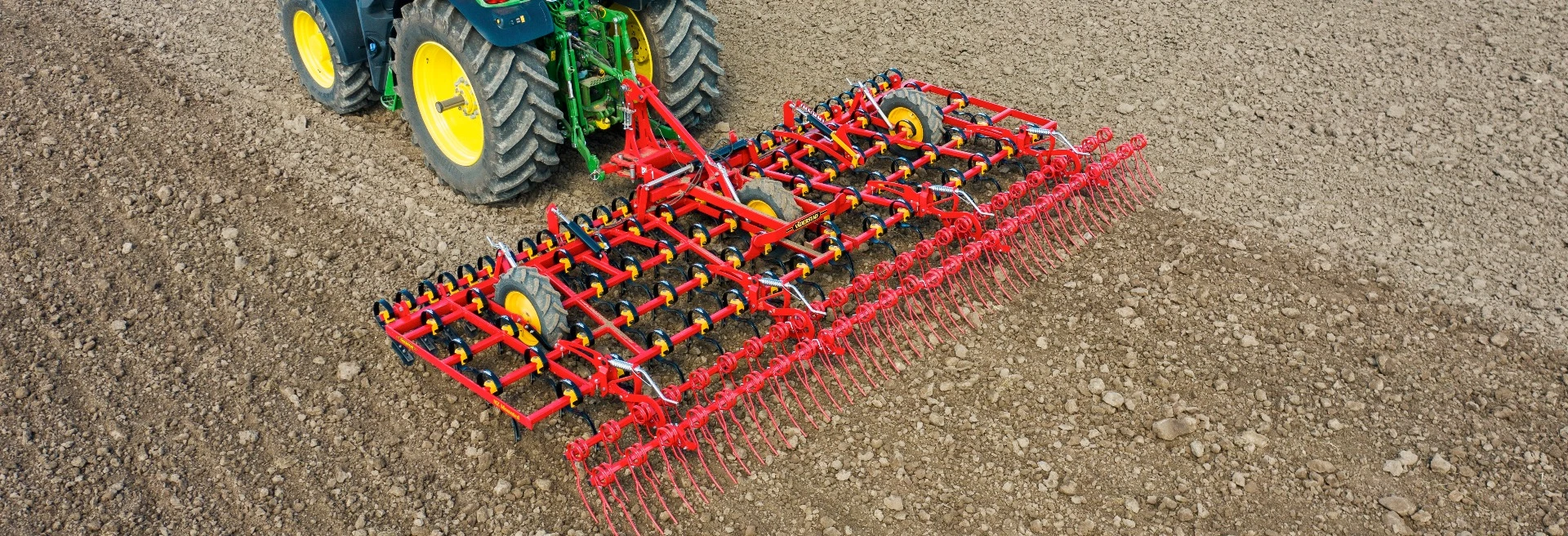
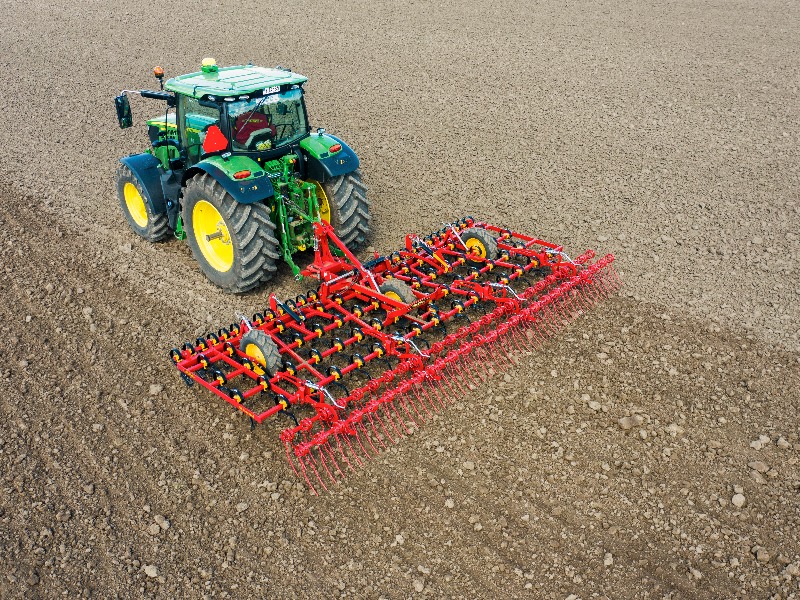
Our wide range of seedbed cultivators includes machinery of different manufacturers, configurations, and working widths, giving you the opportunity to find equipment that suits the technical aspects of your farm’s requirements. Each machine on our site is built by a trusted, well-known manufacturer that undergoes a quality assessment upon arrival, ensuring it meets our ready-for-work standard. Choose from seedbed machinery in widths of 3m, 5m, and wider for seamless cultivation and achieve an optimal seedbed ready for planting.
General-use cultivators and seedbed cultivators differ in their soil impact and design, with both pieces of machinery ultimately having different purposes in the cultivation process.
While general-use cultivators are designed for secondary tillage after drilling or ploughing, performing general seedbed preparation by breaking up compacted soil and incorporating organic matter, seedbed cultivators perform final tillage and soil preparation by creating a firm and level seedbed immediately prior to sowing.
These differences are reflected in the design of each machine. Generic cultivators use a configuration of heavier legs, discs, and tines that cultivate at deeper working depths (up to 30cm) for greater soil disturbance that improves aeration and promotes strong root development. Whereas seedbed cultivators utilise shallower and lighter tines (usually no deeper than 15cm) followed by levelling boards and rollers that prepare the seedbed. They are often utilised for soil preparation in cases where the seeds being planted are more sensitive and require finer soil preparation.
Find out more about the differences in cultivation machinery and depths in our used cultivators buying guide.
Find a seedbed cultivator ideal for your tractors, farm size, or soil requirements in our extensive range of machinery widths in stock. We supply cultivators from narrow 3m and 4m machines to machinery with large widths of 6m, 7.5m and even up to 8m.
We stock used seedbed cultivators from established and trusted manufacturers including these popular models and brands:
As one of the nation’s leading suppliers to the agricultural industry, with more than 30 years’ experience, we have the knowledge to help you get the best deal on a seedbed cultivator. Our nine-acre site has hundreds of machines in stock. We’re conveniently located in central England.
Our customer-centric approach is at the core of everything we do, ensuring all the farmers who choose us as their equipment partner save time and money while making the best decisions for their needs. Contact us today by calling 01926 640 637, sending an email to sales@amtec.co.uk, or by using the form on our website. Discover the ways we can help - you won’t regret it!
Choose based on your soil type, residue levels, working window, and tractor power. A good starting point is AMTEC’s tine vs disc guidance for different soil types: tines often suit lighter soils and deeper loosening, while discs can perform well in heavier clay and higher residue, working efficiently in the top layer. If you want a structured “what to buy and what to check” framework, use the used cultivator buying guide.
We stock a wide mix of used cultivators for sale, including primary cultivators, seedbed cultivators, short disc cultivators, and stubble cultivators, with options suited to everything from deeper soil disturbance to shallow stale seedbed creation and residue management.
If you need a cultivator that can keep you moving when conditions change, a disc-based option is often the safer bet, especially in moisture-retentive soils. Disc cultivators can work effectively in slightly wetter conditions, helping extend your working window, while tine systems can drop off in wet conditions due to smearing.
For many farms, that points to short discs / stubble disc cultivators as the most flexible “get it done” choice, for stubble work and for breaking down ploughing.
If you don't own the cultivator to suit changing conditions, consider hiring one. Our quick Hire Calculator is a great starting point to see how much renting machinery could save you.
After harvest work is usually about speed, minimal disruption, and keeping on top of weeds and residue without over-working the profile. In many situations, light cultivation of the very top layer is all that is required, and a Väderstad Carrier or similar disc machine is commonly used.
Short discs are also positioned as a strong in-season option because they can work straight onto stubble to create a stale seedbed and encourage early weed germination (“chitting”), then help refine ground ahead of drilling.
Stock changes daily, but you will regularly see popular machines from leading brands such as Väderstad, Simba, Horsch, Lemken, Sumo, Kverneland and more. When available, common models include Väderstad Carrier, Väderstad TopDown, Simba X-Press, Horsch Terrano, and Sumo Trio.
We frequently have practical UK working widths like 3m and 4m, plus larger folding units (availability varies). The quickest way to confirm widths in stock is to check the live listings of used cultivators.
Yes. You are welcome to view the machinery at our yard, located in Warwickshire, Central England. Our facility is easily accessible and set up for viewing, and our team is always happy to assist customers in person. Please get in touch to arrange your visit.
We can deliver machinery across the UK and worldwide, and we can usually arrange transport at short notice through our delivery network. If you are exporting, AMTEC also has an export support page for international buyers.
AMTEC’s position is that second-hand machinery does not carry a manufacturer-timed warranty, but if it has been workshop checked and the salesperson is confident it is all good, AMTEC will stand behind it.
You should inspect goods on delivery and notify AMTEC in writing within the timeframes set out in the Terms & Conditions of Sale (including guidance for non-delivery/short delivery and for apparent damage/defect/shortage).
We can support buyers with finance discussions and help point you towards suitable routes. If you want to explore options before speaking to the team, AMTEC has guidance on commonly used machinery finance and funding approaches.
Used cultivators are generally straightforward to run long-term because most ongoing cost sits in wearing parts. When buying used, prioritise a straight, crack-free frame and sound hydraulics, then keep on top of routine checks to reduce downtime in-season. For common issues and fixes, use AMTEC’s troubleshooting guide, and for what to check when buying used, use the buying guide.